 If you’ve ever looked into affiliate marketing and thought, “This is cool, but I don’t want to chase one-time commissions forever,” then recurring commission affiliate programs are probably already on your radar — or they should be.
These programs are one of the closest things online to building predictable, compounding income without creating your own product. Instead of getting paid once and starting from zero again, you earn commissions every month (or year) as long as your referral stays a customer.
Let’s break down how recurring commission affiliate programs actually work, why they’re so powerful, and what to watch out for if you’re thinking of using them on your blog or website.
What Is a Recurring Commission Affiliate Program?
A recurring commission affiliate program pays you ongoing commissions for each customer you refer, rather than a single payout.
Here’s the basic idea:
- You promote a subscription-based product or service
- A visitor clicks your affiliate link
- They sign up and become a paying customer
- You earn a percentage (or fixed amount) every billing cycle
- As long as that customer remains active, you keep getting paid
This could be monthly, quarterly, or yearly, depending on how the company bills its users.
Common examples include:
- Web hosting
- Software tools (SaaS)
- Membership platforms
- Online services
- Email marketing tools
- VPNs
- Design or SEO tools
How Recurring Commissions Differ From One-Time Commissions
Traditional affiliate programs work like this:
- You make a sale
- You get paid once
- That’s it
Recurring programs flip the script.
Instead of:
“How many sales can I make this month?”
You start thinking:
“How many customers can I add to my income stream?”
Let’s look at a simple comparison.
One-time commission example
- Commission: $50 per sale
- You refer 10 customers
- Total earned: $500
- Next month: back to zero
Recurring commission example
- Commission: $20 per month per customer
- You refer 10 customers
- Month 1: $200
- Month 2: $200
- Month 3: $200
- After a year: $2,400 (assuming no cancellations)
And that’s without adding a single new referral after month one.
That’s why recurring commissions are often described as stacking income.
The Subscription Model Behind Recurring Programs
Recurring affiliate programs exist because the business itself operates on a subscription model.
Instead of selling a one-off product, companies rely on:
- Monthly recurring revenue (MRR)
- Customer retention
- Long-term value per user
Affiliate marketers fit perfectly into this model because:
- The company pays you only while the customer pays them
- There’s less risk for the business
- Long-term customers are more profitable
- Everyone is incentivized to keep users happy
In many cases, recurring affiliate payouts come directly from the subscription fee your referral pays.
How Affiliate Tracking Works Over Time
A common question is: “How does the company know the customer is mine months later?”
That’s where affiliate tracking systems come in.
Here’s how it usually works:
- A visitor clicks your affiliate link
- A tracking cookie or account tag is assigned
- The visitor signs up for the service
- Your affiliate ID is permanently linked to that account
- Every time the customer renews, the system credits you
In most recurring programs:
- The cookie duration matters only until signup
- Once the account is created, the referral is locked in
- You don’t need the user to keep clicking your link
This means you’re not competing with other affiliates after the signup happens.
Typical Commission Structures You’ll See
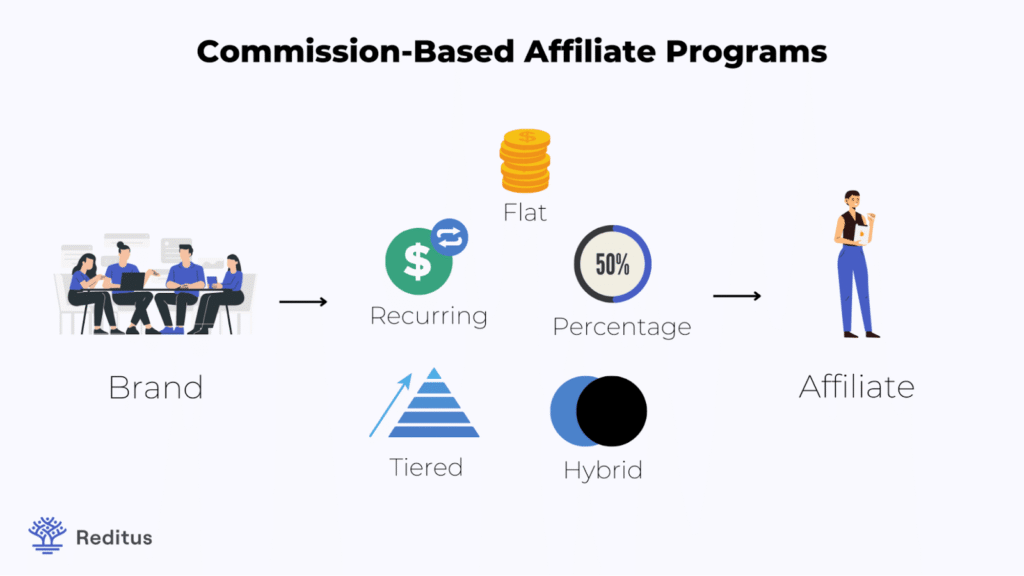
Recurring affiliate programs aren’t all structured the same. Here are the most common formats.
Percentage-Based Commissions
You earn a fixed percentage of whatever the customer pays.
Example:
- 30% commission
- Customer pays $50/month
- You earn $15/month
If the customer upgrades:
- You earn more automatically
Flat Monthly Commissions
You earn a set dollar amount per active referral.
Example:
- $10 per active customer per month
- Customer pays $30/month
- You still earn $10
This structure is simpler and easier to predict.
Tiered Commissions
Your commission increases as you refer more customers.
Example:
- 20% for 1–10 referrals
- 30% for 11–50 referrals
- 40% for 50+
This rewards affiliates who consistently drive quality traffic.
Why Recurring Affiliate Programs Are So Powerful

Recurring commissions change how you think about affiliate marketing.
Instead of grinding endlessly, you’re building something that compounds.
Here’s why they’re so attractive.
Predictable Income
With enough active referrals, you can estimate:
- Next month’s income
- Next quarter’s income
- Even annual revenue
That kind of predictability is rare online.
Compounding Growth
Every new referral stacks on top of the last.
Even modest growth can turn into something substantial over time.
Less Pressure to Constantly Sell
Once content ranks or traffic is flowing:
- Old blog posts keep converting
- Past referrals keep paying
- New content accelerates growth instead of restarting it
Higher Long-Term Earnings
Recurring commissions almost always outperform one-time payouts in the long run — even if the upfront commission seems smaller.
The Role of Churn (and Why It Matters)
No discussion of recurring commissions is complete without mentioning churn.
Churn is simply:
The rate at which customers cancel their subscriptions
If customers leave quickly, recurring income collapses.
That’s why the quality of the product you promote matters a lot.
High churn means:
- Short-lived commissions
- Unstable income
- Frustrated audiences
Low churn means:
- Long-term payouts
- Growing monthly totals
- A healthier affiliate business
Before promoting a recurring program, always ask:
- Does this service actually solve a problem?
- Would I use it long-term?
- Are customers happy with it?
Where Recurring Affiliate Programs Work Best
Recurring commissions shine in content that’s:
- Educational
- Problem-solving
- Comparison-based
- Evergreen
Some high-performing content types include:
- “Best tools for…” posts
- Tutorials
- Setup guides
- Reviews with real usage
- Case studies
- Long-form comparisons
The goal isn’t to sell hard — it’s to help the reader make a good decision.
When someone signs up because your content genuinely helped them, they’re far more likely to stick around.
Common Mistakes Beginners Make
Recurring affiliate programs are powerful, but they’re not magic.
Here are a few common mistakes to avoid.
Chasing high percentages only
A 50% commission on a bad product is worse than a 20% commission on a great one.
Ignoring customer retention
If users cancel in 30 days, recurring doesn’t mean much.
Over-promoting too many tools
Trust matters. Promoting everything under the sun weakens your credibility.
Expecting instant results
Recurring income grows slowly at first — then accelerates.
How Long It Takes to See Results
This is the honest part.
Recurring affiliate income usually looks like this:
- Months 1–3: Almost nothing
- Months 4–6: Small, encouraging numbers
- Months 7–12: Momentum builds
- Year 2+: Compounding takes over
It rewards patience more than hype.
The longer your content lives, the more valuable it becomes.
Final Thoughts
Recurring commission affiliate programs work because they align incentives perfectly:
- The company wants long-term customers
- You want long-term income
- The customer wants a solution that actually works
When done right, this model turns your blog into an income-producing asset, not just a traffic generator.
Instead of chasing sales, you’re building relationships.
Instead of starting over every month, you’re stacking progress.
And instead of guessing what you’ll earn, you’re watching it grow.
That’s why so many experienced affiliates eventually focus almost exclusively on recurring commissions — once you experience compounding income, it’s hard to go back.